Auditing
Application Audit Log records tenant, actor, action, target, optional provider/model, metadata, and timestamp for privileged/security-relevant operations. Additional durable records include approvals, task/workbook/playbook runs, notification deliveries, connector health, case timelines, and Evidence Locker digests.
Correlation model
Start with UTC time and actor, then correlate application object IDs with approval/tool-call IDs, Azure Activity Log correlation IDs, ticket/incident IDs, and destination delivery records. A successful application call may precede eventual external processing; a failed external call can still have a successful approval record.
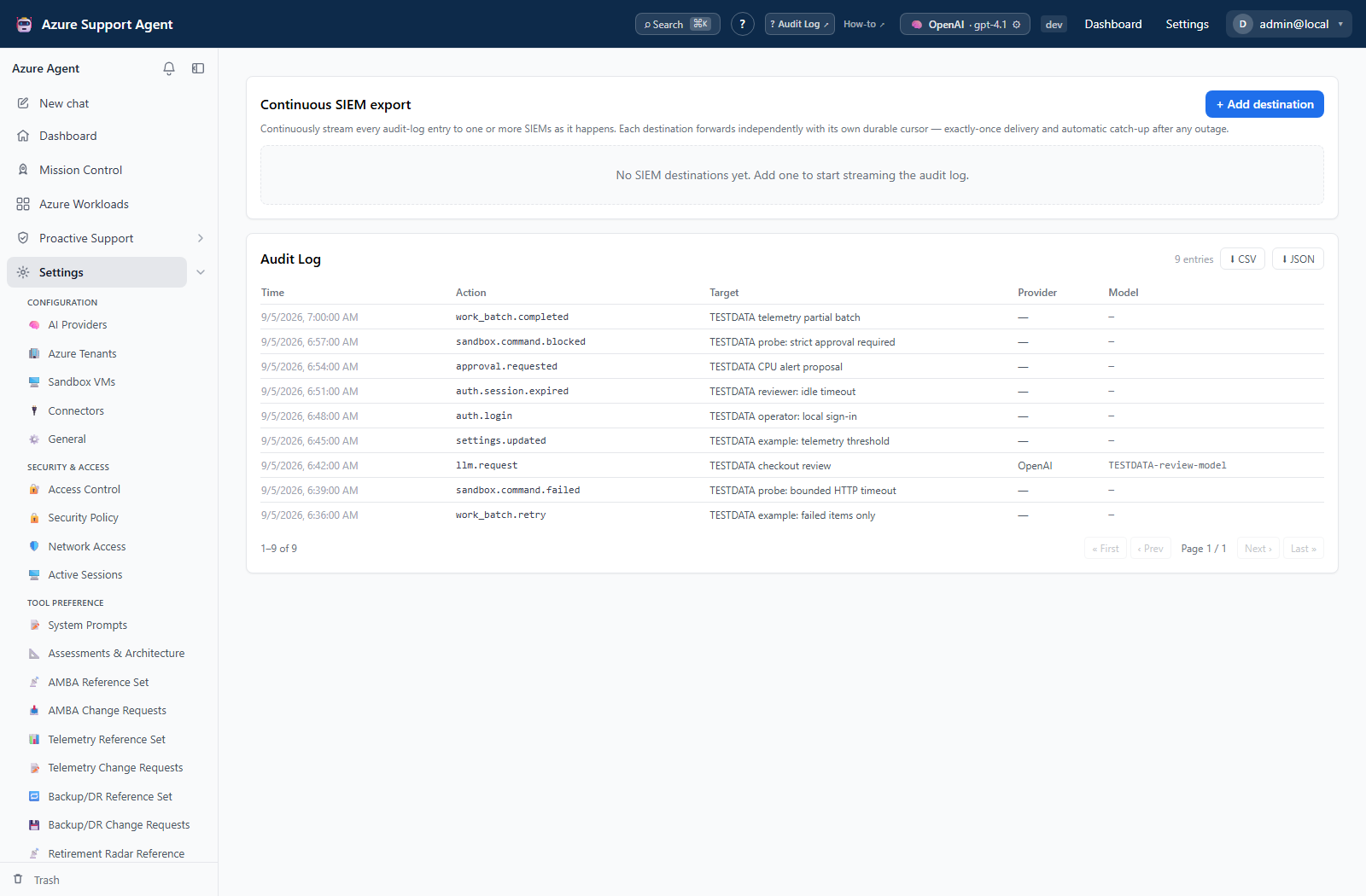
Sensitive values should be redacted before audit storage, but every holder of audit.read must still treat metadata as confidential. Control exports and apply organizational retention/monitoring. SIEM destination changes additionally require settings.write; a custom role managing them through /admin/audit needs both keys because the page itself is read-gated. Test and flush perform real delivery, while reset cursor replays from the beginning and can duplicate records. Forwarding through ordinary connectors is not a guaranteed SIEM cursoring service unless separately implemented and verified.
Evidence
Use Evidence Locker for a point-in-time source bundle and Case Files for chronological decisions. SHA-256 verification detects unexpected evidence changes but does not establish who originally supplied every upstream Azure record.