Technical documentation
| Guide | Audience |
|---|---|
| Architecture | Contributors mapping backend modules, APIs, and frontend views |
| Technical specification | Engineers reviewing the stack, persistence, runtime, and integrations |
| Manual deployment | Operators building and configuring the application manually |
| Documentation regeneration | Maintainers rebuilding feature references and how-to guides from source |
| Contributing on GitHub | Developers preparing local changes and pull requests |
The source repository is the authority for implementation behavior. Feature guides describe supported user workflows; technical pages explain how those workflows are implemented.
Start with a concrete implementation surface
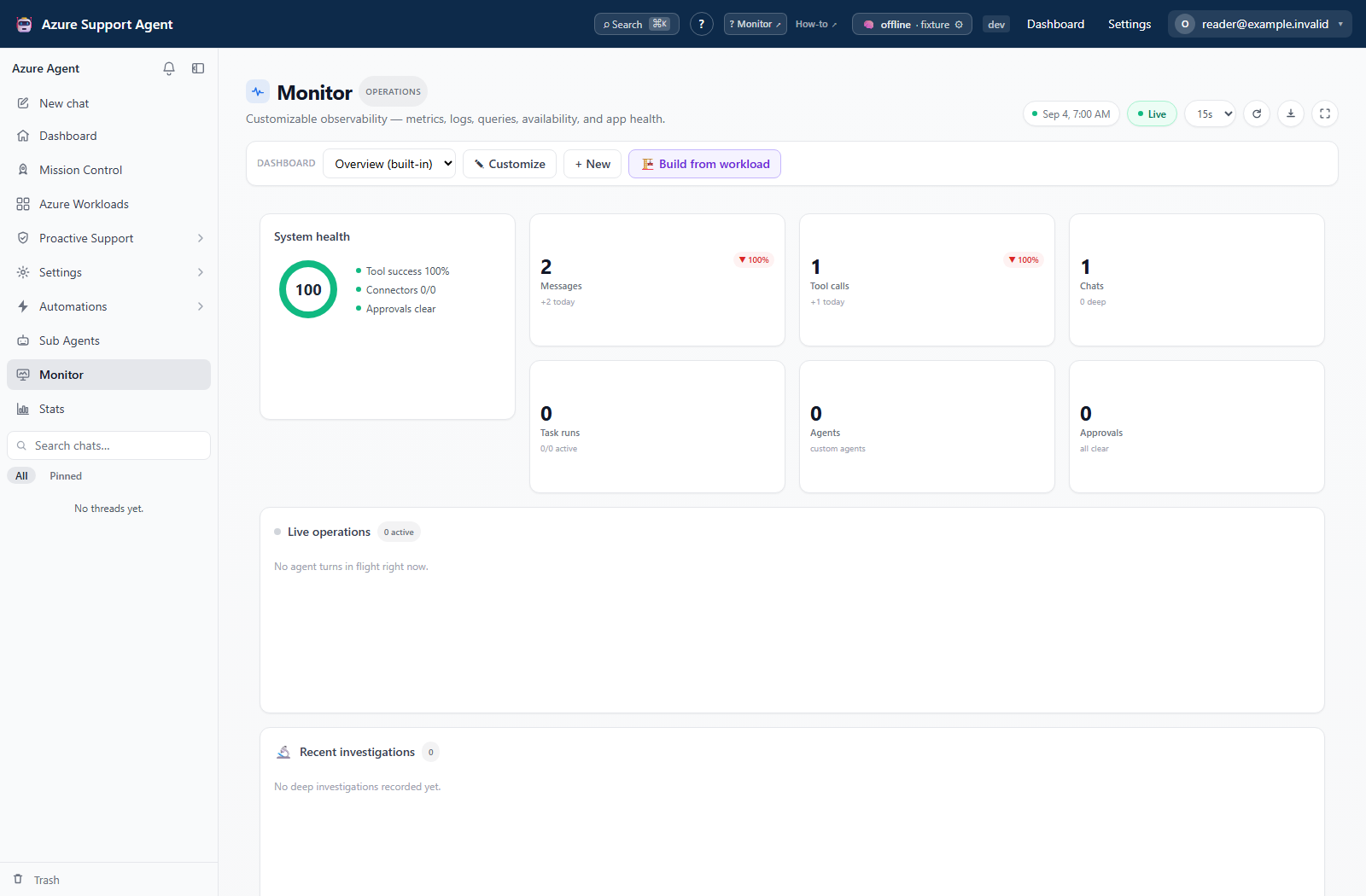
Monitor is one example to trace from a routed view through its typed API client to backend aggregation and stored records. Use the architecture guide for module locations and the specification for the widget/data-source model; use the operational guides for actions in the UI.